
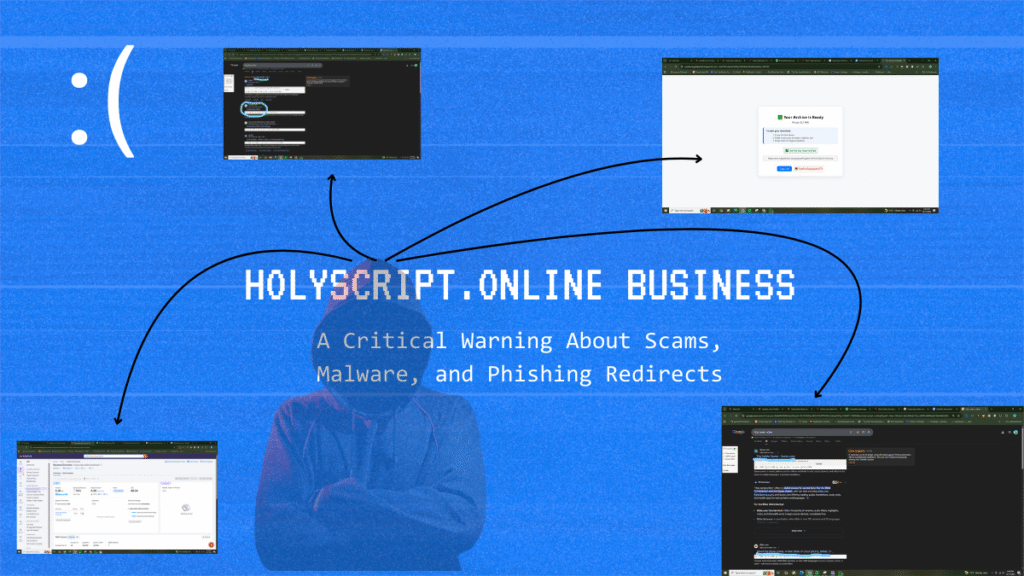
If you are researching the keyword “holyscript.online business,” or simply searching for “holyscript online,” you are likely looking for information related to sacred religious texts or legitimate church software. However, our investigation reveals a severe danger: the holyscript.online domain is actively being exploited by hackers to redirect users to malicious websites, steal personal data, and install dangerous malware.
This article serves as an urgent warning, exposing the scam and providing clear steps to keep your devices and information safe.
The Deceptive Lure: Why the Name Is So Effective
The keyword “holyscript online” naturally leads users to believe they are accessing a digital repository for religious texts. Google Search results confirm this user intent: when searching for “holy script online,” the top results refer to platforms like Quran.com and Bible.com, noting that the term refers to digital access for sacred texts like the Bible and the Quran.
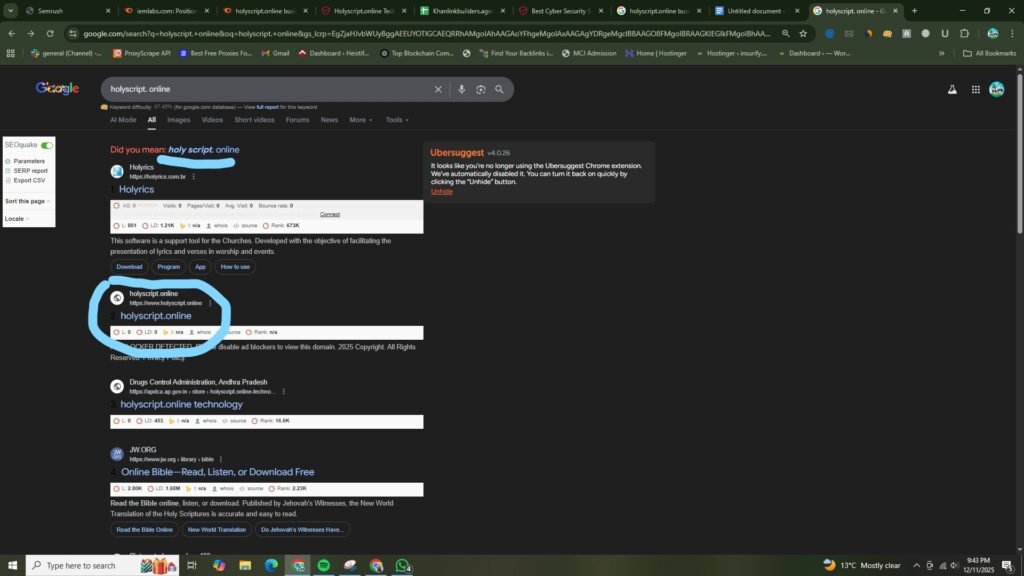
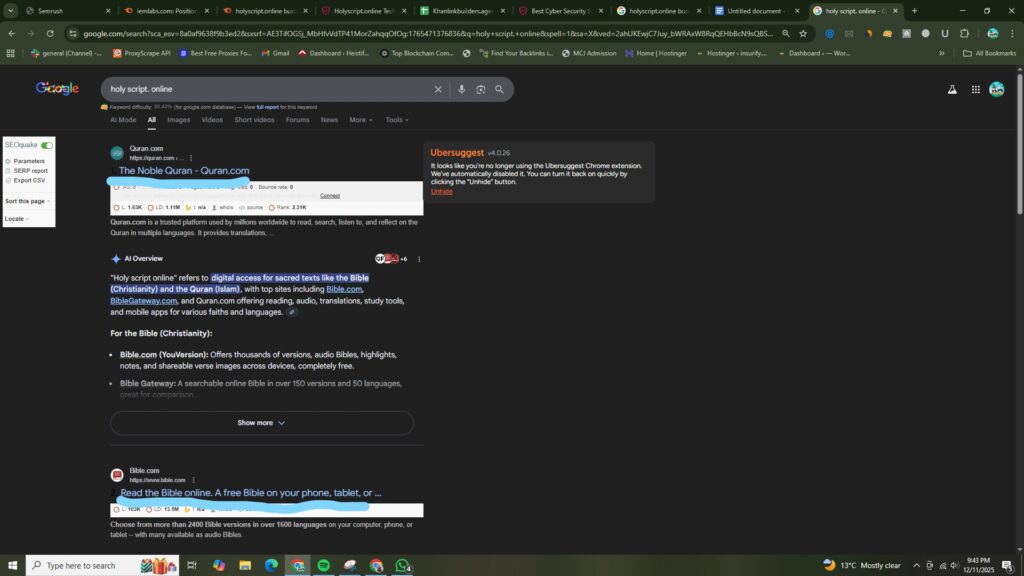
This is the exact reason the holyscript.online domain is so effective for cybercriminals:
- Exploiting Religious Context: The name sounds legitimate and trustworthy, leading users to overlook typical warning signs.
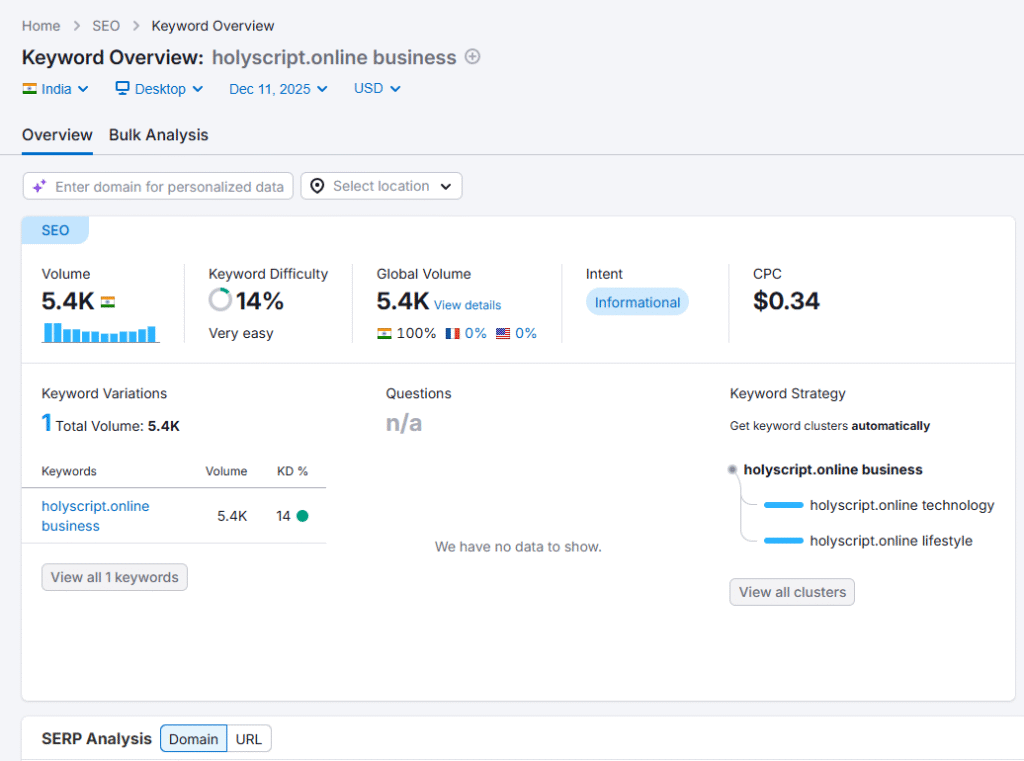
- Targeting Informational Searchers: SEO data shows the keyword “holyscript.online business” has an Informational Intent and a decent search volume (around 5.4K globally), but a Very Easy Keyword Difficulty (14%). This makes it a prime target for malicious actors who can easily rank and exploit the trust associated with the religious connotation.
How the holyscript.online Scam Works
The domain does not host a legitimate “holy script” or offer church business services. Instead, it operates as a traffic redirection mechanism designed to move users from a trusted search engine environment to a dangerous landing page.
1. The Instant Redirection Chain
When a user clicks on a malicious link associated with holyscript.online (or is unknowingly redirected through an ad or compromised site), the user is immediately passed through a series of untraceable redirect URLs.


- Instead of seeing a legitimate homepage, the user often sees an empty white screen or a brief flicker of an unknown URL (such as one redirecting to a suspicious host like
storagehq.com/7T-2/). This quick, hidden redirect is a hallmark of ad fraud and malware distribution networks.
2. The Final Destination: Malware & Phishing
The ultimate goal of the redirection chain is to land the user on a phishing or malware distribution page. The most common final payload involves a fake download prompt disguised as a helpful “archive.”
Evidence of a Malicious Payload:
One observed landing page, hosted on a suspicious domain (e.g., media.megafilehost2.homes), delivers a direct threat:
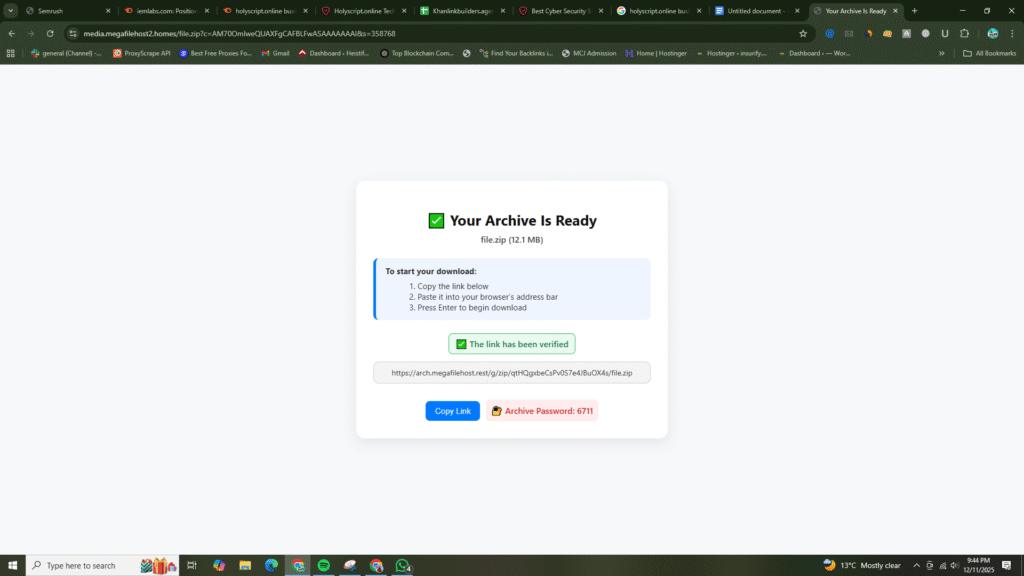
- The page prominently features a “Your Archive is Ready” message, offering a file like
file.zipfor download. - It falsely claims, “The link has been verified” to establish trust.
- Crucially, it provides an “Archive Password” (e.g., 6711) and instructs the user to copy a link into their browser.
This is a classic Trojan/Malware distribution technique. The file contained within the password-protected ZIP archive is highly likely to be malicious software—such as a virus, a keylogger, or ransomware—designed to leak personal data, monitor activity, or compromise the user’s entire system.
Safety Recommendations: How to Protect Yourself
If you searched for “holyscript online” or “holy script online business,” and were redirected, you should immediately check your device for suspicious activity.
1. Avoid the Malicious Domain:
- NEVER click on search results or links that lead to
holyscript.online. - If you are redirected to a page prompting you to download a ZIP file or enter a password for an “archive,” immediately close the tab.
2. Use Legitimate Sources for Sacred Texts: When searching for the Bible, Quran, or other sacred texts, rely on trusted, long-established sources:
- For the Quran: Use Quran.com (as seen in Google’s knowledge panel).
- For the Bible: Use Bible.com or Bible Gateway.
- For Church Presentation Software: Reputable programs like Holyrics are legitimate alternatives that share a similar-sounding name.
3. Run a Security Scan: If you clicked on any links or, more importantly, downloaded or opened the ZIP file, run a full system scan using a reputable anti-malware and antivirus program immediately. Change all passwords if you suspect your device has been compromised.

Abdullah Zulfiqar writes about technology in a simple, practical way, helping readers stay updated and make smarter decisions in an ever-evolving digital world.