

Introduction
Learning to code has never been more accessible in 2026, with platforms like freeCodeCamp, Codecademy, Udemy, and Coursera offering countless options for beginners and professionals. But while most of these platforms focus on front-end development, quick tutorials, or broad coding basics, Boot.dev stands out with a backend-first approach. It emphasizes computer science fundamentals, practical backend development, and career-ready skills for learners serious about coding.
Unlike other platforms, Boot.dev goes beyond teaching syntax. It helps learners build real-world backend applications using Python, Go, and JavaScript, covering data structures, algorithms, APIs, databases, and scalable backend systems.
But is Boot.dev worth your time, money, and effort in 2026? How does it compare to freeCodeCamp, Codecademy, and other top coding platforms? In this comprehensive Boot.dev review (2026), we’ll explore courses, projects, pricing, learner experiences, and career opportunities to help you make an informed decision.
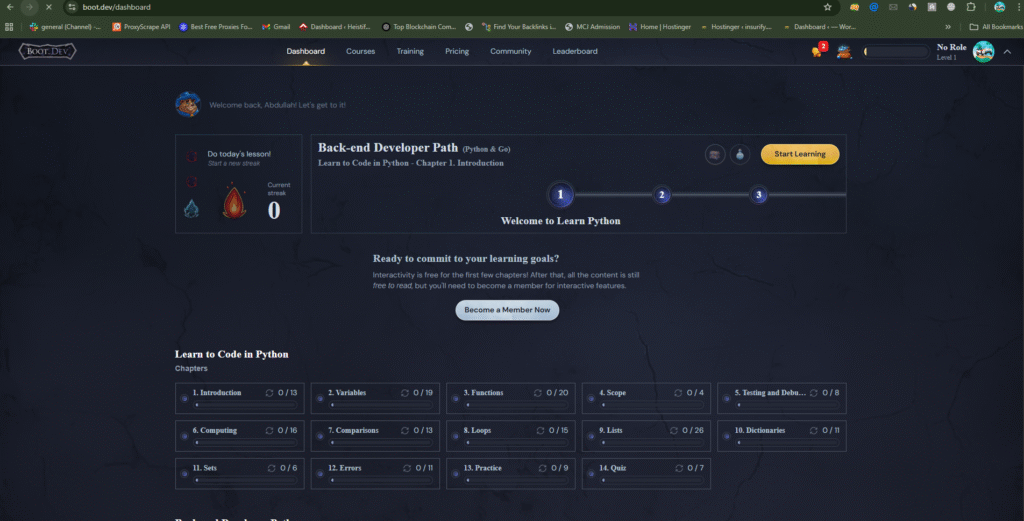
But does Boot.dev actually deliver on this promise? Can it compete with well-established platforms like freeCodeCamp and Codecademy? And most importantly, is it worth your time, effort, and money?
This comprehensive Boot.dev Review (2026) will answer all those questions. We’ll cover:
- Boot.dev’s course content (backend, data structures, algorithms, etc.)
- How it compares to alternatives like freeCodeCamp and Codecademy
- Real learner reviews and experiences (including global perspectives)
- Job placement success stories
- Pricing and affordability
- Strengths, weaknesses, and final verdict
What Is Boot.dev?
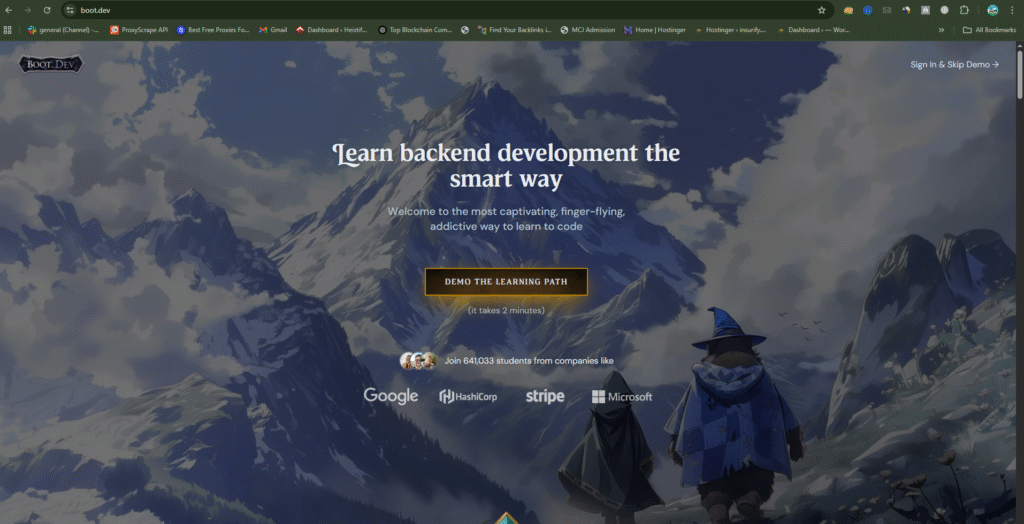
Boot.dev is an online coding platform that specifically focuses on backend development and computer science fundamentals. While most platforms start learners with front-end skills like HTML, CSS, and basic JavaScript, Boot.dev goes deeper by teaching the languages and concepts that power real-world applications behind the scenes.
Its tagline could be summarized as:
“Learn backend development. Skip the fluff. Build job-ready skills.”
The platform is structured into a gamified learning experience with progress tracking, coding exercises, projects, and clear paths that guide learners from beginner to job-ready developer.
Boot.dev Course Content in Depth
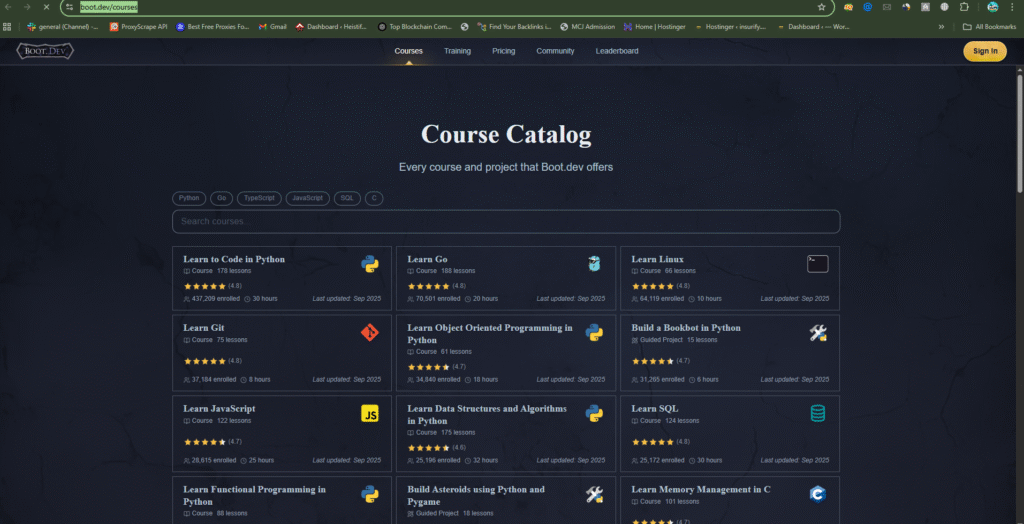
Boot.dev offers a structured curriculum divided into tracks. Each track contains lessons, coding exercises, and real-world projects. Let’s break down the core areas.
1. Backend Development Path
The backend track is Boot.dev’s main highlight. Students learn the principles of server-side programming, working with:
- Python (for fundamentals, scripting, APIs)
- Go (Golang) (for building fast, modern backend systems)
- JavaScript/Node.js (for full-stack integration and backend workflows)
Topics covered include:
- RESTful API design
- Authentication and security basics
- Working with JSON and HTTP requests
- Writing production-level backend services
- Scaling backend applications
By the end, learners can build functioning backend applications that mimic real-world production systems.
2. Data Structures and Algorithms
Unlike many platforms that only give surface-level exposure, Boot.dev dedicates significant time to computer science foundations:
- Arrays, Linked Lists, Stacks, Queues
- Trees, Graphs, Hash Maps
- Sorting and Searching Algorithms
- Time and Space Complexity (Big-O notation)
- Recursion and Dynamic Programming basics
This is a key differentiator. Platforms like Codecademy provide intro lessons on these topics, but Boot.dev integrates them into backend development workflows, ensuring learners don’t just memorize concepts but actually apply them in backend projects.
3. Databases and SQL
Databases are the heart of backend systems. Boot.dev teaches:
- Relational Databases (PostgreSQL, MySQL)
- Writing complex SQL queries
- Database design and normalization
- Transactions and indexing
- Integration with backend applications
This ensures learners understand not just the syntax but how to design efficient, scalable systems.
4. APIs and Integration
Modern backend developers must connect multiple systems. Boot.dev’s courses cover:
- REST APIs
- JSON, XML data handling
- API authentication (OAuth, JWT)
- API testing and debugging
- Building your own APIs from scratch
These skills are directly transferable to industry roles, from fintech to SaaS platforms.
5. Projects and Hands-On Work
Boot.dev emphasizes project-based learning. Sample projects include:
- A To-Do App backend with Go
- Blog API with authentication in Python
- Chat application backend with WebSockets
- Database-driven apps with PostgreSQL
Unlike tutorial-based platforms, Boot.dev forces learners to write code independently, reducing reliance on copy-paste solutions.
Boot.dev vs Competitors
To truly evaluate Boot.dev, let’s compare it with the biggest alternatives: freeCodeCamp and Codecademy.
| Feature | Boot.dev | freeCodeCamp | Codecademy |
|---|---|---|---|
| Focus | Backend & CS fundamentals | Full-stack, beginner-friendly | Broad (frontend, backend, data, career tracks) |
| Languages | Python, Go, JavaScript | JavaScript, Python, SQL, etc. | Python, Java, JavaScript, SQL, Go, C++, etc. |
| Cost | $39/month (or $249/year) | Free | $39.99/month (Pro) |
| Projects | Backend-heavy, industry-style | Full-stack projects | Guided projects, mixed |
| Job Prep | Backend-focused, CS grounding | Free certifications | Career paths, quizzes, portfolio |
| Gamification | Strong (progress, points, levels) | Minimal | Medium |
| Best For | Serious backend learners | Beginners on a budget | Broad learners, career switchers |
Key Takeaways:
- If you want backend specialization + computer science depth, Boot.dev is stronger.
- If you’re on a budget, freeCodeCamp remains unbeatable.
- If you want a broad set of options, Codecademy offers variety but less backend depth.
Reviews From Learners
Boot.dev has received generally positive reviews, especially from learners who felt underserved by other platforms.
Positive Feedback:
- Clarity: Lessons are concise and structured logically.
- Gamification: Keeps learners motivated with points and progress tracking.
- Depth: Goes beyond “just coding” by teaching CS fundamentals.
- Backend-first approach: A refreshing difference from front-end heavy competitors.
Criticisms:
- Less front-end content: If you want to learn React, Vue, or frontend frameworks, Boot.dev isn’t enough.
- Smaller community compared to freeCodeCamp’s massive forums.
- Language limitations: Focused mainly on Python, Go, and JavaScript, whereas Codecademy offers 10+ languages.
Job Placement Success Stories
Boot.dev markets itself as career-focused rather than hobbyist-oriented. While it doesn’t guarantee placement like some bootcamps, its alumni report success in:
- Backend developer roles in startups and SaaS companies
- Data engineer roles leveraging backend + SQL knowledge
- Software engineering internships where CS fundamentals made them stand out
For example:
- A learner from the U.S. reported landing a Go developer role within 6 months after completing Boot.dev’s backend path.
- Another from Europe used Boot.dev to strengthen data structures knowledge for technical interviews, leading to a job at a fintech company.
While Boot.dev is not yet as widely recognized as Codecademy or Coursera, its depth-focused backend approach gives learners a competitive edge in interviews.
Boot.dev Pricing (2026 Updated)
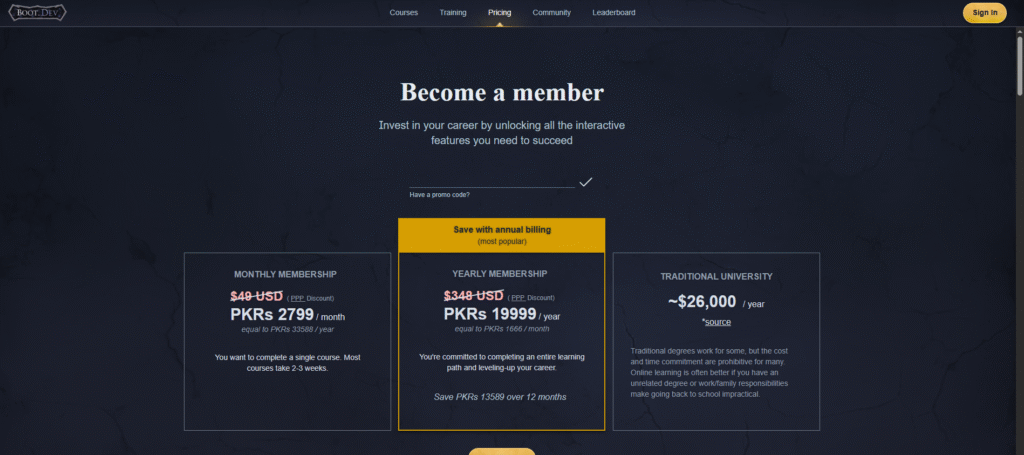
Boot.dev follows a subscription-based pricing model, and in 2026 it also offers PPP (Purchasing Power Parity) discounts for learners in countries like Pakistan, India, and others.
1. Monthly Membership
- PKR 2,799 / month (~$49 USD without PPP, discounted for local pricing)
- Equivalent to ~PKR 33,588 per year if paid monthly.
- Best for learners who want to test the platform or complete a single course (2–3 weeks).
2. Yearly Membership (Most Popular)
- PKR 19,999 / year (~$348 USD without PPP, discounted with PPP)
- Equivalent to ~PKR 1,666 per month.
- Best for committed learners completing the entire backend learning path.
- Saves ~PKR 13,589 compared to monthly billing.
3. Traditional University Comparison
- Boot.dev compares itself to the average U.S. university degree cost of $26,000 per year.
- The platform argues that online learning is more cost-efficient for career switchers and working professionals.
Alternatives to Boot.dev (Pricing Comparison)
Here’s how Boot.dev compares with other major learning platforms:
| Platform | Pricing (2026) | Focus | Notes |
|---|---|---|---|
| Boot.dev | PKR 2,799/month or PKR 19,999/year (PPP discount) | Backend & CS fundamentals | Best for backend specialization |
| freeCodeCamp | Free (donations optional) | Full-stack, broad | Certificates available, massive community |
| Codecademy Pro | $39.99/month or ~$240/year | Broad (frontend, backend, data science) | Offers career paths, projects, quizzes |
| Udemy | $10–$30 per course (discounted) | Depends on instructor | Great for one-off topics, lacks structure |
| Coursera Plus | $59/month or ~$399/year | University-backed CS & coding | Certificates from top universities |
| Pluralsight | $29/month or $299/year | Software engineering, cloud, backend | Best for professionals and advanced learners |
Key Takeaway:
- Boot.dev is cheaper than university or Coursera Plus,
- More focused than Codecademy,
- And more structured than Udemy.
For learners in Pakistan or similar regions, the PPP discount (PKR 19,999/year) makes it very competitive.
Strengths of Boot.dev
- Backend-first curriculum (unique among platforms).
- Strong CS fundamentals (algorithms, data structures).
- Gamified learning keeps motivation high.
- Real-world backend projects.
- Affordable compared to coding bootcamps ($5,000–$15,000).
Weaknesses of Boot.dev
- Limited front-end coverage.
- Smaller community vs freeCodeCamp or Codecademy.
- Less global recognition (still growing brand).
- Not ideal for absolute beginners with zero exposure to coding.
Final Verdict: Is Boot.dev Worth It?
If your goal is to become a backend developer or strengthen your computer science fundamentals for job interviews, Boot.dev is one of the best platforms in 2026.
It strips away unnecessary fluff, avoids endless HTML/CSS tutorials, and gets straight to the skills employers actually value: Python, Go, JavaScript, APIs, databases, and algorithms.
However, if you want a full-stack learning experience including front-end frameworks, or if you’re on a tight budget, then freeCodeCamp or Codecademy may be better starting points.
Verdict:
- Best for: Aspiring backend developers, learners preparing for technical interviews, professionals upskilling in backend.
- Not ideal for: Learners wanting front-end development, design, or broad beginner exposure.
Overall Rating: 4.6 / 5
FAQs About Boot.dev
Is Boot.dev free?
No, Boot.dev is subscription-based ($39/month or $249/year).
Can Boot.dev get me a job?
Boot.dev doesn’t guarantee jobs but prepares you with backend + CS fundamentals that employers value. Success depends on applying your skills in projects, internships, and interviews.
Does Boot.dev teach front-end?
Boot.dev doesn’t guarantee jobs but prepares you with backend + CS fundamentals that employers value. Success depends on applying your skills in projects, internships, and interviews.
How does Boot.dev compare with Codecademy?
Boot.dev is deeper in backend + CS; Codecademy is broader and covers more languages + career paths.
Is Boot.dev worth the money?
Yes, if you want backend specialization and efficient learning. For hobbyists or those on a budget, freeCodeCamp may be better.
Conclusion
In an era where most platforms emphasize shiny front-end apps, Boot.dev fills a critical gap: teaching backend development and computer science fundamentals in a practical, gamified, and career-focused way.
If you’re serious about becoming a backend developer or strengthening your technical foundations for interviews, Boot.dev is an excellent choice. For learners who want breadth over depth, or those unable to afford a subscription, free alternatives like freeCodeCamp may still serve well.
Boot.dev isn’t the biggest platform yet—but it’s one of the smartest choices for backend learners in 2026.

Abdullah Zulfiqar writes about technology in a simple, practical way, helping readers stay updated and make smarter decisions in an ever-evolving digital world.